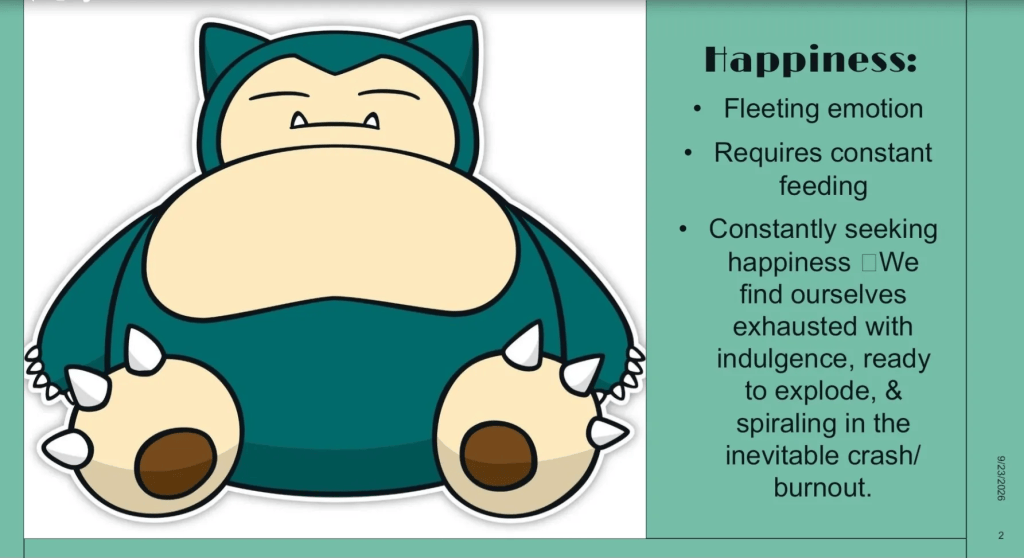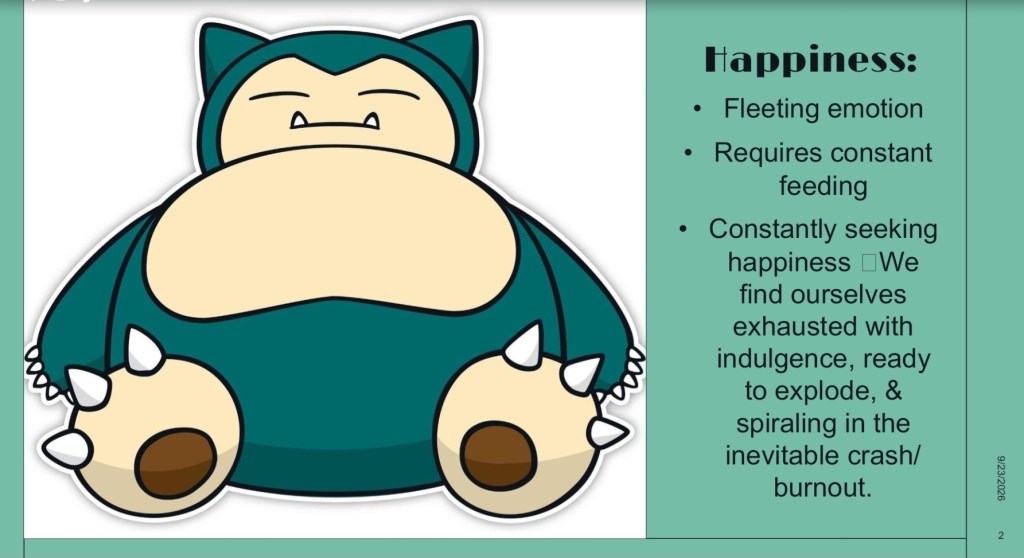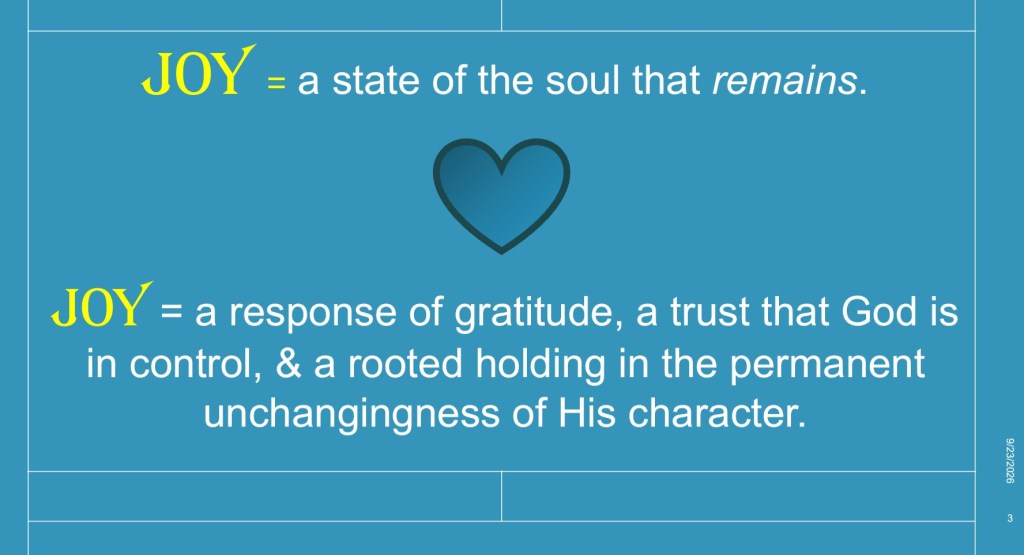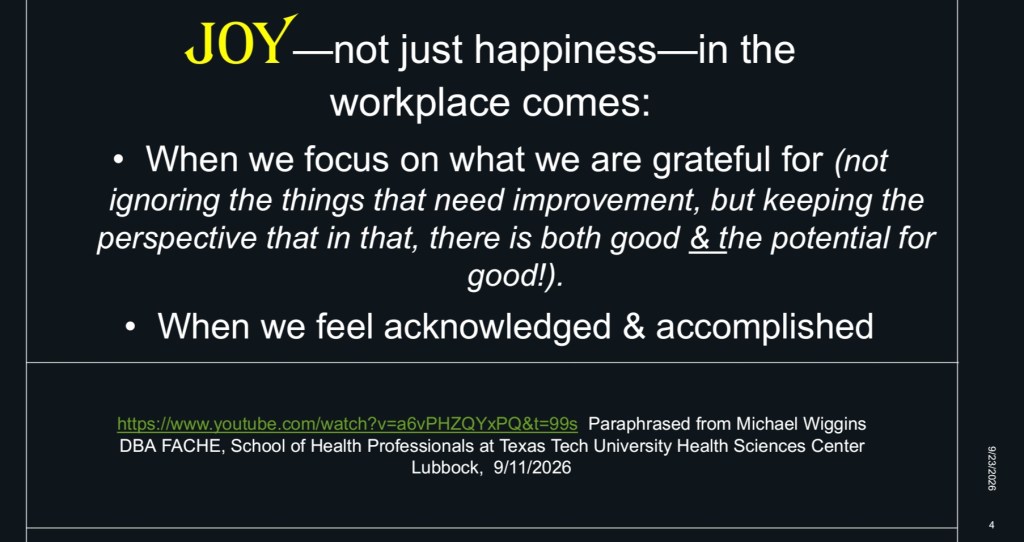
Before we tackle Joy’s “opposite” sister, I want to touch on something people forget to mention: Emotions are NOT linear. We live in a Western society that expects a lot of “either/or,” but life is more of a “both/and.” I think Eastern cultures are better at grasping these concepts and anticipating the complicated outcomes & possibilities.
I love the concept that two things can exist simultaneously while not in agreeance–we are not bound to being siloed in how we process, yet we’re thrown when we find ourselves experiencing both. We can laugh in the midst of mourning a loved one when we think about funny memories; we find ourselves scared in the midst of celebrating, etc. Why are we surprised when we find one emotion in the middle of processing another? Science actually says this is a sign our brains are functioning normally! We’re made for this!! We’re complicated beings, created by an infinitely-more complicated Being, and we cannot de-validate our emotions just because we don’t understand their complexities. They happen. Acknowledge them–God understands them so much more than we do.
“We live in a culture that loves dichotomies: happy or sad, broken or whole, mourning or dancing. We like clear lines and easy categories. But real life doesn’t work that way. Real grief doesn’t work that way. It isn’t just sorrow. It’s love. It’s longing. It’s even laughter in the midst of tears. Grief doesn’t erase joy, and joy doesn’t cancel grief. They often walk side by side, coexisting in the same fragile heart……The presence of joy does not diminish grief; rather, it honors it by allowing us to see beyond the loss—to cherish what was, even as we mourn what is no longer.“–https://www.cyndimatos.com/blog/when-grief-and-joy-collide
I’m going to add another note in here (most of this blog is directly what our small group discussed) to say that most of you, if you’ve been reading my blog for a while, know that David & I are well-acquainted with the topic of grief. Grief & sadness are often coupled together but expressed differently. I want to jump in here and say that GRIEF IS VALID. No one wearing the name tag of “Christian” has any right to say your grief isn’t valid. Jesus wept–it’s right there in John 11:35. Grief is an expression of a deep love, separated from your present state. The only reason David & I were able to progress in our journey after our daughter’s death is, and I can’t stress this enough, because we were loved well by a church body that gave us the grace to grieve our loss in transparency, while also comforting us with genuine hope. They never pretended to have the answers to “why;” they never told us to “get over it.” They held us while we wept; they wept with us. They prayed with us, and they witnessed Jesus walk with us through that valley with true kindness. It is because we have been graced with the very best of a loving church body, that we know and believe the church CAN and SHOULD be the safest place for hurting people…
Sadness is a normal human emotion defined as a state of unhappiness, sorrow, or emotional pain usually triggered by loss, disappointment, or difficult life events.
Key Characteristics of Sadness (according to a Google search & a few random resources):
• Universal Emotion: Recognized as one of the basic human emotions across all cultures.
• Physical Signs: Often shown through crying, watery eyes, lowered lip corners, or a quiet and lethargic demeanor.
• Purpose: Signals a natural need for comfort, help, or social support (that’s usually the LAST thing many of us want when we’re in the “mullygrubs,” as we say at home. Leave. Me. Alone…but you’d better hug me! But don’t touch me! ACK!–it reminds me of my very favorite Calvin & Hobbes cartoon).
• Duration: Temporary and passes with time, unlike clinical depression which is a long-lasting mental disorder (Google)
Sadness and clinical depression are different, but people often use the terms interchangeably to describe deep emotional pain.
10 common types of sadness and depressive conditions according to Google:
1. Everyday Sadness (Transient Sorrow)
• What it is: A normal, short-term emotional reaction to a difficult day, a disappointment, or hurt feelings.
• Key detail: It passes quickly and does not stop you from doing your daily tasks.
2. Grief and Bereavement
• What it is: Deep sorrow caused by the death of a loved one, the end of a relationship, or a major life loss.
• Key detail: It comes in waves and mixes with other emotions like anger or fond memories.
3. Major Depressive Disorder (Clinical Depression)
• What it is: A serious mental health condition defined by the Cleveland Clinic that causes ongoing sadness and a total loss of interest in life.
• Key detail: Symptoms last most of the day, nearly every day, for at least two weeks.
4. Persistent Depressive Disorder (Dysthymia)
• What it is: A long-term, continuous low mood that is less intense than major depression.
• Key detail: It lasts for two years or longer.
5. Seasonal Affective Disorder (SAD)
• What it is: A mood disorder that follows a seasonal pattern, usually starting in the late fall or winter when there is less sunlight.
• Key detail: Symptoms include low energy, sleeping too much, and craving carbohydrates.
6. Postpartum Depression
• What it is: Severe sadness and anxiety that happens during pregnancy or after childbirth.
• Key detail: It goes far beyond the normal “baby blues” and can make it hard to bond with the baby (my personal experience with this was life-altering; I’m forever grateful to my mom for noticing & for saving my life!).
7. Bipolar Depression
• What it is: The low-mood phase of bipolar disorder, where a person cycles between extreme highs (mania) and deep lows.
• Key detail: It is treated with mood stabilizers rather than standard antidepressants.
8. Atypical Depression
• What it is: A specific subtype of major depression where your mood can temporarily brighten in response to positive events.
• Key detail: Symptoms include heavy feelings in the arms or legs and sleeping or eating much more than usual.
9. Premenstrual Dysphoric Disorder (PMDD)
• What it is: A severe form of premenstrual syndrome (PMS) that causes extreme sadness, irritability, and anxiety in the weeks before a period.
• Key detail: Symptoms stop shortly after menstruation begins (Psychiatrists tried to say this wasn’t real a few years ago. I politely disagree…it’s horrible).
10. Situational Depression (Adjustment Disorder)
• What it is: A short-term depressive reaction to a specific, stressful life event like losing a job or going through a divorce.
• Key detail: It starts shortly after the stressful event and usually improves as you adapt.
Biblical characters who struggled with depression:
Here are 12 Bible figures who struggled with depression, each offering valuable lessons on how to approach emotional distress from a biblical perspective:
1. Job:
Job 3:11-26, where Job curses the day of his birth and wishes he had never been born.
Lesson: Even in deep sorrow, Job remained faithful to God, expressing his pain while continuing to seek God’s answers.
2. King David
Psalm 42:11, where David questions his soul, “Why, my soul, are you downcast?”
Lesson: David expressed his feelings honestly before God, but also reminded himself of God’s faithfulness and hope.
3. Elijah
I Kings 19:4, Elijah prayed that he might die, feeling alone and defeated.
Lesson: God didn’t condemn Elijah for his feelings but ministered to him by sending an angel to provide food, rest, and encouragement.
4. Jeremiah (The Weeping Prophet)
Jeremiah 20:14-18, where he laments his birth and the burden of his prophetic calling.
Lesson: Jeremiah’s transparency in his sorrow teaches us that it’s okay to express our emotions to God, even in moments of deep frustration.
5. Moses
Numbers 11:14-15, where Moses asks God to take his life because the burden of leading the people became too much.
Lesson: God responds to Moses’ cries, reminding him that He is always with him, and provides the support and leadership Moses needs.
6. Hannah
1 Samuel 1:10-15, where Hannah weeps and prays bitterly before the Lord, asking for a son.
Lesson: God hears our prayers, and through perseverance and faith, He answered Hannah’s cry for a child.
7. Asaph
Psalm 73:13-17, where Asaph questions whether following God is in vain.
Lesson: Asaph finds comfort when he remembers God’s faithfulness, learning that God will ultimately judge the wicked and bless the righteous.
8. Peter
Luke 22:61-62, where Peter weeps bitterly after realizing he had denied Jesus.
Lesson: Even in our worst failures, Jesus offers forgiveness and restoration, as seen when He reinstates Peter in John 21:15-19.
9. Paul
2 Corinthians 1:8-9, where Paul describes the despair he felt during a time of hardship.
Lesson: Paul learned to rely on God’s grace, acknowledging that God’s strength is made perfect in our weakness (2 Corinthians 12:9).
10. Ruth
Ruth 1:20-21, where she expresses her bitterness and grief, calling herself “Mara” (bitter).
Lesson: Ruth’s story shows us that even in the midst of sorrow and loss, God is working behind the scenes to bring restoration and hope.
11. Mary (Mother of Jesus)
John 19:25, where Mary stands near the cross, watching her son suffer.
Lesson: Mary’s faith and trust in God remained strong even during the most painful and confusing moments, showing us that faith can endure through suffering.
12. Jonah
Jonah 4:3, where Jonah expresses his desire to die, feeling displeased with God’s mercy toward Nineveh.
Lesson: Jonah’s story teaches us that God’s plans may not always align with our expectations, but His ways are always for our good and His glory.
Conclusion:
These biblical figures faced moments of depression, despair, and emotional struggle, yet their stories remind us that God understands our pain and offers compassion, healing, and hope. Through their examples, we see that it is possible to experience deep sorrow and still remain faithful, turning to God for comfort and guidance. In times of emotional distress, we can draw strength from these biblical figures, knowing that God is with us, even in our darkest moments.
Walter Brueggemann, a theologian, calls lament “the telling of all our secrets to God – the hidden, dark, painful, needy secrets that we prefer not to have or acknowledge.” This goes back to the introduction–the NEED for transparency with our Father. We cannot expect any kind of healing or progress until we’re ready to bare it all before the Lord…we have to trust that He is Who He says He is, and that He. Loves. Us.
There is joy in the journey of sadness…and sometimes, there is sadness in the journey of joy. Transparency with God, trusting that Jesus is Big Enough to carry our burdens, and allowing ourselves to meet with Him every day in that place of dependence, is what allows us to have the healing and growth He wants us to have as we walk through our valleys….
Note: Sadness and grief are a part of life, as we all know. Depression, however, is a significant state that I don’t want to ignore or gloss over. If you are dealing with prolonged sadness, fatigue, anxiety, heaviness you can’t get relief from, etc., you may be dealing with a chemical or hormonal depression that your medical professional can help you with. There is ABSOLUTELY NO SHAME in being a Christian but struggling with depression or mental health issues!!!!! We live in a broken world and have a constant barrage of chemical, natural, visual, audible, distractions and negativity flying at us nearly 24/7. Our bodies & our brains weren’t designed for the constant processing we have to do, & sometimes, we need medical/pharmaceutical/psychological help to get our minds right, so that we can get into the place where we can spiritually process and prioritize. I personally have benefitted from medical and therapeutic assistance that I am grateful for. Much like you wouldn’t try to preach to a starving man without first giving his physical body food; you can’t try to embrace joy & get healing from grief/sadness/depression without sometimes getting your physical needs met. If you or your loved one needs urgent mental healthcare, please dial 988 or visit https://www.cdc.gov/mental-health/caring/index.html for more help.